


Every week, another AI tool launches promising to replace an entire department. And every week, another outsourcing agency claims a human team will always outperform software. If you run a UK business, you’ve probably seen both pitches in the same LinkedIn feed, sometimes from the same company.
According to the British Chambers of Commerce, more than half of UK firms are now using some form of AI in daily operations, and adoption is accelerating fastest among smaller businesses. At the same time, outsourcing hasn’t slowed down. UK companies are still handing off bookkeeping, customer support and back-office work to external teams at a steady pace. So which one does your business actually need?
The honest answer is: it depends on what you’re trying to fix. This guide breaks down what AI tools and outsourced teams each do well, where they fall short, what they cost, and how to decide without the sales pitch either side usually gives you.
AI Tools vs Outsourced Teams: The Core Difference
The distinction isn’t about which one is “smarter.” It’s about what type of work each one is built for.
AI tools are software. They follow rules, patterns and trained models to complete specific, repeatable tasks—categorising expenses, drafting emails, answering FAQs, sorting data. They don’t get tired, they don’t take holidays, and they cost roughly the same whether you use them ten times a day or ten thousand.
Outsourced teams are people. A dedicated bookkeeper, customer service agent or ecommerce specialist working remotely (or offshore) as an extension of your business. They bring judgement, context and the ability to handle situations nobody thought to write a rule for.
Neither is a straight upgrade on the other. A tool that never gets tired still can’t make a judgement call on an angry customer. A brilliant outsourced analyst still can’t work at 3am for free. The real question for most UK business owners isn’t “AI or outsourcing”, it’s which tasks belong where.
What AI Tools Can Actually Do for a UK Business
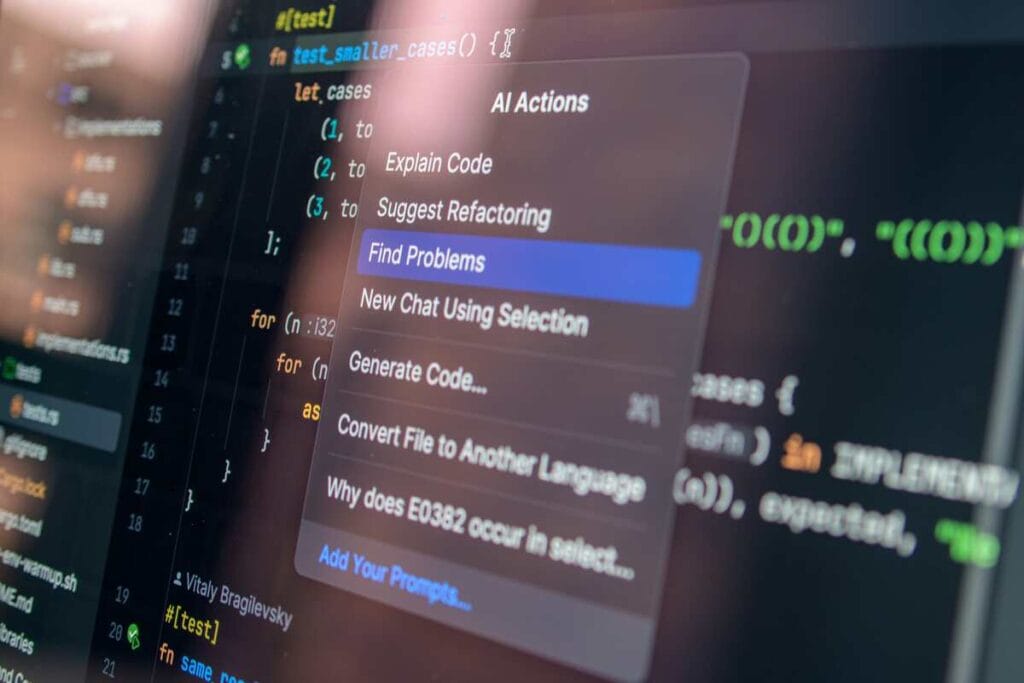
AI has become genuinely useful for a specific, narrow band of business tasks:
- Data entry and categorisation: Tools like Dext and the AI features inside Xero and QuickBooks can scan receipts and invoices and sort transactions automatically.
- First-draft content: Social captions, email replies, product descriptions, blog outlines.
- Basic customer queries: FAQ-style chatbots that handle order status, opening hours, simple troubleshooting.
- Scheduling and reminders: Calendar management, automated follow-up sequences.
- Pattern-spotting in financial data: Flagging unusual transactions or cash flow trends.
Where AI consistently falls short: anything that requires context outside its training, emotional nuance, creative strategic thinking, or accountability when something goes wrong. If a customer is upset, a VAT rule is ambiguous, or a supplier issue needs negotiating, AI can support the process but it can’t own the outcome. Even the AI-focused bookkeeping guides admit this openly: automation handles the repetitive number-crunching, but a qualified professional is still needed for anything HMRC-facing or genuinely unusual.
What an Outsourced Team Can Actually Do

An outsourced team extends your business the way an in-house hire would, minus the recruitment costs and management overhead. In practice, that covers:
- Ongoing bookkeeping and back-office work: Reconciliations, AP/AR processing, ledger maintenance, audit-ready records.
- Ecommerce operations: Amazon and Shopify account management, listing optimisation, order and returns handling.
- Customer support: Live chat, email and phone coverage with real judgement on escalations.
- Administrative and data work: The ongoing, less glamorous tasks that quietly consume a founder’s week.
The advantage here is accountability and adaptability. A managed team can absorb an unusual situation, follow up on something that fell through the cracks, and represent your brand the way you’d want it represented—something no chatbot can fully replicate yet. The trade-off is cost per hour and onboarding time, both of which are higher than flipping on a software subscription.
AI Tools vs Outsourced Teams: Head-to-Head Comparison
| Factor | AI Tools | Outsourced Team |
|---|---|---|
| Availability | 24/7, no exceptions | Typically business hours, extendable with shift coverage |
| Cost Structure | Fixed monthly subscription, scales cheaply | Priced per hour or per seat, scales with workload |
| Judgement & Nuance | Limited to trained patterns | Strong—handles ambiguity and edge cases |
| Setup Time | Days | Typically 2–4 weeks for full onboarding |
| Consistency | Never tired, never distracted | Consistent with proper QA oversight |
| Compliance & Accountability | Requires human sign-off on regulated tasks | Can take direct accountability (e.g. HMRC-facing bookkeeping) |
| Scalability during Peak Periods | Instant, no extra hiring | Needs a managed provider with flex capacity |
| Customer Relationship Building | Weak — impersonal by design | Strong — builds trust over time |
AI Tools vs Outsourcing: What Does It Actually Cost?
Cost comparisons often only look at the sticker price, which is misleading. Here’s a more realistic picture for a growing UK business handling a moderate volume of admin, bookkeeping and customer queries:
AI tools only
Low fixed monthly cost (often £20–£100 per tool), but every task outside the tool’s capability still lands back on the business owner’s desk—usually during the busiest part of the week.
Fully outsourced team
Higher direct monthly cost, but it includes judgement, accountability, and someone who can be held responsible when something needs fixing. No hidden “gap” where tasks silently don’t get done.
In-house hire
The most expensive option once you factor in recruitment, salary, training, software licences and benefits—and still limited to standard working hours unless you hire multiple shifts.
The comparison that’s usually missing from this conversation is what happens when a task falls into the gap AI tools can’t cover and there’s no outsourced team to catch it. That gap has a real cost: missed deadlines, compliance risk, or a customer who simply doesn’t get a reply—even if it doesn’t show up as a line item.
Which One Does Your Business Actually Need?
The right mix depends on which part of the business is under pressure:
Ecommerce and Amazon sellers
AI tools are useful for repricing alerts and basic listing checks, but account health monitoring, policy compliance and case handling need a team that actually understands Amazon’s systems—the kind of ongoing seller account management most sellers underestimate until something gets suspended.
Bookkeeping
AI-powered software genuinely speeds up receipt capture and reconciliation. But UK tax rules change often enough that most businesses outgrow DIY-plus-AI bookkeeping the moment transaction volume or complexity increases—which is exactly the point where an outsourced bookkeeping team earns its cost back in avoided errors and reclaimed time.
Customer support
A chatbot can handle “where’s my order” at 2am. It cannot de-escalate a frustrated customer or protect your brand’s reputation in a public review. That still needs a person.
Admin and back-office work
This is the clearest case for outsourcing over AI alone; most back-office tasks involve enough exceptions and judgement calls that full automation creates more cleanup work than it saves.
The Hybrid Model: Why Most UK Businesses End Up Here

AI Handles the Repetitive Work
Almost every business that seriously compares AI tools and outsourced teams arrives at the same conclusion: it isn’t really a choice between the two. The businesses getting the best results use AI to handle the repetitive, high-volume layer of work, while a real outsourced team takes care of everything that needs judgement, accountability and a human touch.
A Smarter Way to Structure Operations
This is closer to how operationally mature UK businesses are structured in 2026—not AI replacing people, and not people ignoring AI. Instead, a managed team uses AI tools as part of how they deliver work faster and more accurately.
This is very different from buying a stack of disconnected AI subscriptions and hoping they cover everything, or relying on a fully manual outsourced team that could be working faster with the right tools.
Avoiding the Outsourcing Gap
Stitching together AI tools, freelancers and offshore help without a clear structure is where things can start to go wrong for small businesses. Lost visibility, inconsistent quality and unclear accountability can quickly become problems when something slips.
A properly managed team that already uses AI internally avoids this fragmentation, giving you a single point of accountability instead of five disconnected tools and contractors.
Where Nixxie Solutions Fits In
That’s the gap Nixxie Solutions is built to close: outsourced BPO, ecommerce and back-office support that’s already AI-augmented internally. You get the speed and efficiency of automation without losing the accountability of a real team behind it.
Final Thoughts
AI has changed the way UK businesses handle everyday work, but that does not mean people have become unnecessary. The real opportunity is to use each where it makes the most sense. Let AI take care of repetitive, time-consuming tasks, while an experienced team handles the decisions, exceptions and customer interactions that still need a human touch.
For many growing businesses, the best answer is not choosing between AI and outsourcing. It is building the right combination of both. When automation improves efficiency and a reliable team provides the judgement and accountability behind it, businesses can reduce the workload without sacrificing quality or control.
The goal is simple: use technology to work smarter, and use people where they add the most value. That balance can give UK businesses the flexibility to scale without adding unnecessary complexity to their operations.
Ready to Combine AI Efficiency with Real Human Support?
Looking for an outsourced team that already builds AI into how it works? Book a free consultation and find out where automation and a real team can save you the most time.